Why Does My CPAP Hose Keep Getting Tangled?
If you use a CPAP machine every night, you probably know how frustrating the hose can be. It can twist, tangle, fall off the nightstand, or end up across the bed when you’re trying to sleep.
A tangled CPAP hose isn’t just annoying. It can make your bedtime routine harder and make it more difficult to keep your CPAP setup neat and comfortable.
Fortunately, a few simple organization habits can make a big difference.
A CPAP hose is long, flexible, and constantly moving as you sleep. That combination can make it surprisingly difficult to keep under control.
The hose may twist around itself, get caught underneath your arm or bedding, or slide off the nightstand. If you move around during the night, the hose can move with you and become even more tangled.
Another problem is what happens when the hose is simply left lying loose during the day. It can become twisted before you even put your CPAP mask on at night.
A simple way to improve your setup is to give your hose a designated place and keep it covered and organized when you’re not using it.
Use a CPAP Hose Cover
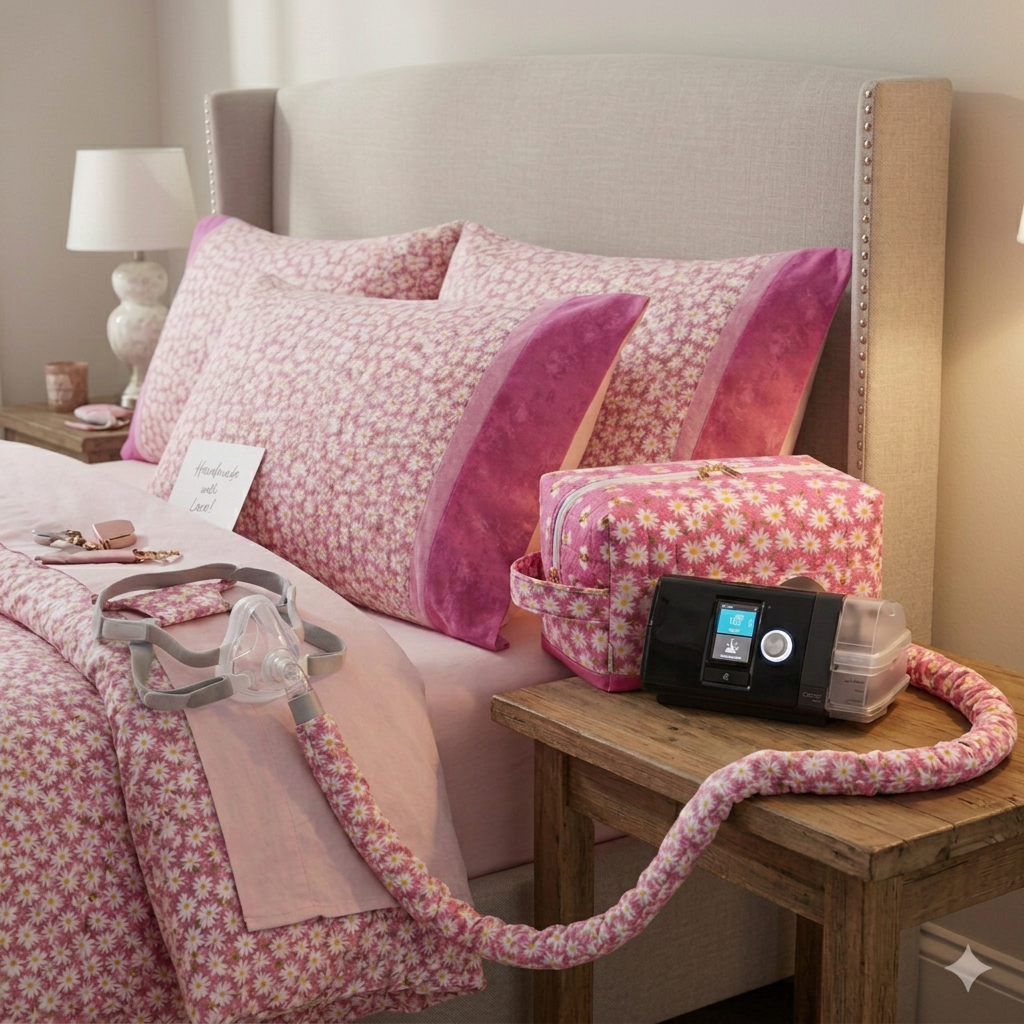
A fabric CPAP hose cover can make a noticeable difference in how your hose feels and behaves.
The cover helps keep the hose contained and gives it a smoother, softer surface. It can also make the tubing more comfortable when it rests against your skin or bedding.
A covered hose is easier to handle, easier to spot on the bed, and can help make your entire CPAP setup feel more organized.
Sew Inclined Company makes handmade CPAP hose covers in a variety of fabrics and colors, so you can choose something that works with your bedroom and personal style.
Shop the Handmade CPAP Hose Covers →https://sewinclinedco.etsy.com/listing/4523744080
Can a CPAP Hose Cover Help With Rain Out?
CPAP rain out happens when moisture in the air inside the CPAP hose condenses into water droplets. You may notice water collecting inside the tubing, hear a gurgling sound, or even feel moisture reaching your mask.
Temperature, humidity, bedroom conditions, and the temperature of the tubing can all affect condensation.
A CPAP hose cover adds a layer of insulation around the tubing. This may help keep the air inside the hose warmer and can help reduce condensation and CPAP rain out for some users.
A hose cover isn’t a guaranteed solution for rain out, and it doesn’t replace proper CPAP humidity and temperature adjustments. However, it can be a simple addition to your setup if condensation is a problem.
If you regularly experience CPAP rain out, you may also want to check your CPAP machine’s humidity and heated-hose settings and follow your equipment manufacturer’s recommendations.
Keep Your CPAP Hose Organized and Comfortable
A CPAP hose doesn’t have to be one more thing you have to fight with every night.
Keeping the hose in a consistent position, avoiding unnecessary twists, and using a fabric hose cover can make your CPAP setup easier to manage.
A hose cover can also add a softer layer between the tubing and your skin and may help reduce CPAP rain out by providing additional insulation around the hose.
Sew Inclined Company makes handmade CPAP hose covers in a variety of fabrics and colors. Each cover is made to fit a standard CPAP hose and is designed to make your nightly setup a little more comfortable and organized.
Need a place to keep all your CPAP equipment together? See our CPAP Machine & Storage Bag Size Guide → https://www.sewinclinedcompany.com/organize-your-cpap-equipment/
Shop Handmade CPAP Hose Covers → https://sewinclinedco.etsy.com/listing/4523744080
If you’re also using supplemental oxygen, Sew Inclined Company makes O2 hose covers to help keep your oxygen tubing more comfortable and easier to manage.
Shop O2 Hose Covers → https://sewinclinedco.etsy.com/listing/4521288645
A few simple changes to how you organize your tubing can make your entire CPAP and oxygen setup feel less cluttered and easier to live with.
A Simple CPAP Hose Routine
A simple routine can help keep your CPAP hose from becoming tangled and make your equipment easier to manage.
At bedtime:
- Place your CPAP machine in its usual location.
- Connect your CPAP hose without twisting it.
- Keep the hose positioned so it has a clear path from the machine to your mask.
- If you use a hose cover, make sure the cover is sitting smoothly along the tubing.
- If you use supplemental oxygen, keep your O2 tubing positioned so it isn’t tangled with your CPAP hose.
In the morning:
- Disconnect your mask and hose as recommended for your equipment.
- Allow the tubing to dry as needed.
- Store the hose in a consistent location instead of leaving it tangled on the bed or floor.
- Keep your CPAP and oxygen accessories together so they’re ready for the next use.
A little consistency can make a big difference. When your hose has a designated place and your equipment stays organized, your nightly CPAP routine becomes simpler and less frustrating.
Looking for a softer, more organized CPAP setup?
Handmade CPAP hose covers and O2 hose covers from Sew Inclined Company can add comfort and help keep your tubing easier to manage. And if CPAP rain out is a problem for you, a hose cover may provide additional insulation around the tubing to help reduce condensation.
Handmade in Colorado
Sew Inclined Company creates handmade CPAP and oxygen accessories designed to make everyday equipment a little more comfortable, organized, and personal.
Handmade in Colorado by Sew Inclined Company using premium fabrics and careful craftsmanship.